
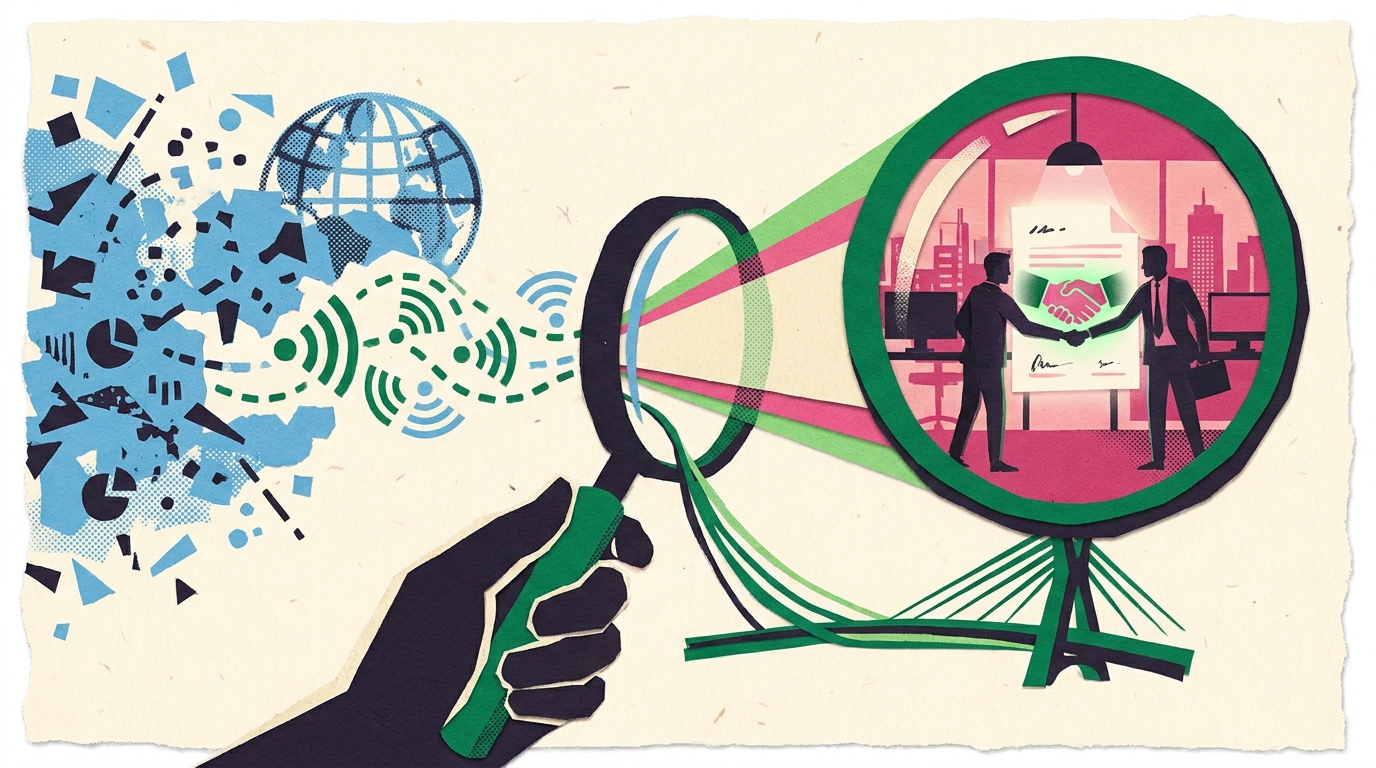
Last week, the founder of a software company from outside Brazil walked out of a one-hour demo with an M&A boutique in São Paulo and wrote to us: the client was impressed with the platform. Two months earlier, we hadn't even spoken to this company.
The company is Equitest, an AI-powered valuation platform. The path to this meeting involved six stages, and all of them were carried out by our team.
1. FINDING THE RIGHT COMPANY
We monitor software marketplaces looking for ready-made products that make sense for Latin America. Equitest appeared on one of them. Before writing, the team carefully read the website and the product. The platform generates valuation reports and covers cases that many tools ignore, such as company valuation for asset division in judicial proceedings.
2. GENERATING PERSONALIZED VALUE FOR THE CLIENT
The first email, sent in August, mentioned this specific detail. We proposed entering Brazil by starting with M&A boutiques and forensic accountants, who work with reports and strict deadlines. The response came the same day: send more information.
3. CLOSING WITH THE CLIENT
Two weeks of email conversations followed until the plan was clear to both sides. In early September, Equitest became a client. We set up the Portuguese landing page and a way for the Brazilian client to pay in local currency.
4. FINDING THE LEADS
With the target audience defined, the team mapped out M&A, valuation, and forensic accounting firms, as well as the decision-makers within them. When a decision-maker has no public contact information, we write to the firm's official channel. An M&A boutique in São Paulo was added to the list through this method.
5. MEDIATING THE CONVERSATION
The email to the boutique was sent in Portuguese and addressed their specific pain point: the time a valuation consumes when it relies on spreadsheets and manual review. Equitest was mentioned in a single sentence as the solution to this problem. The response arrived a few weeks later, and the conversation continued via email, with us clarifying every doubt until the request to see the platform in action.
6. SCHEDULING THE MEETING ALIGNED FOR BOTH PARTIES
The firm requested a Tuesday or Wednesday morning, Brasília time. Equitest's founder speaks English and lives in a different time zone. We found a time that worked for both, sent the link, confirmed attendance, and made it clear who would lead the demo. After the meeting, Equitest itself requested that all negotiations in Brazil continue through us, and they offered special conditions to facilitate closing the deal.
The sale is still in progress, and what this journey already demonstrates is the model working from end to end. A company that built a good product in another country reached a meeting with the exact type of client it wanted in Brazil—without a local team—and with someone on this side managing every single step.
For those selling software, the hard work in another country usually happens before the demo: understanding the market, reaching the right person, in their language, with a reason tied to the work they do today, and sustaining the conversation until both parties are on the same call.
That is what we do every day. Making the world a little smaller by bringing those who built the solution closer to those who need it.
If you have a product that works abroad, who would be the first client you would like to find in Latin America?